If the government's bill to increase the House of Commons by 30 seats passes, the redistributed seats could affect 19 Conservative ridings, 10 Liberal ridings and one NDP riding which make up some of the most populated ridings in Ontario, Alberta and British Columbia.
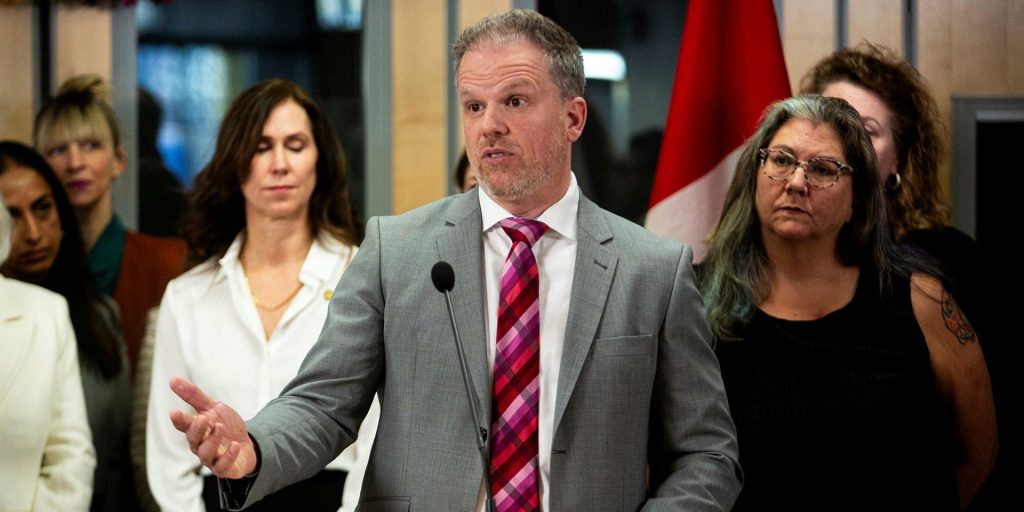
Democratic Reform Minister Steven Fletcher (Charleswood-St. James-Assiniboia, Man.) introduced Bill C-12, the Democratic Representation Bill, on April 1, which would change the formula to increase seats in the House of Commons after every 10-year national census. The new formula is the government's attempt to address the under-representation of the three fastest growing provinces in Canada—Ontario, Alberta and British Columbia.
If passed, Ontario would get 18 new seats with the new formula, compared to the four with the current formula, last adjusted in 1985, for the redistribution of seats. Alberta would receive five new seats, instead of one, and British Columbia would receive seven, instead of two. The total number of seats would increase from 308 to 338. The next decennial census will take place in 2011 and would take effect after electoral boundary commissions are set up and new ridings drawn up in each of the three provinces. The last redistribution took place after the 2001 census and took three years to implement, in time for the 2004 election campaign, which increased the seats from 301 to 308.
While it's up to the boundary commissions to decide where the new ridings will go, Dalhousie University political science professor Peter Aucoin, who has served on two electoral boundary commissions in Nova Scotia, said it would make sense to see where the population has grown in the three provinces since 2001 and try to speculate where the new ridings could go.
"In a way, if you say, can you extrapolate, what you mean is can you second guess them? The way in which the rules are now set up is that representation by population is both the primary criterion and it's also the one that most boundary commissions are paying close attention to now," Prof. Aucoin told The Hill Times. "That means that you can extrapolate in the sense that you can figure out where those population growths are, but trying to redraw the seats however, you have to be very careful because there are just so many different permutations you can come up with."
According to Statistics Canada's census metropolitan areas, in Ontario, the Toronto CMA (which includes 23 cities in the surrounding areas such as Milton, Oakville, Mississauga, Brampton, Newmarket, Markham and Richmond Hill in addition to Toronto proper) has grown from 4,682,897 people in the last decennial census in 2001 to 5,623,500 in 2009, which is a 20 per cent increase. According to Elections Canada, Liberal MP Andrew Kania currently has the highest populated riding in Brampton West, Ont., with 170,422 people. This is compared to Conservative MP Greg Rickford who has the least number of constituents in his Kenora, Ont., riding with 64,291 people. Kenora is a rural riding, but even in the nation's capital, Liberal MP Mauril Bélanger, who represents Ottawa-Vanier, Ont., has 101,611 constituents. If population were the number one criterion for the electoral boundary commissions, Ontario could see new ridings created around Mr. Kania's riding, as well as in other GTA ridings Markham, Vaughan, Bramalea, Halton, Mississauga, Whitby, Thornhill, Brampton, Scarborough, Willowdale, Cambridge and Kitchener, as well as two ridings in the Ottawa area. The top 18 most populated ridings in Ontario are held evenly between Conservatives and Liberals at nine each.
In Alberta, Edmonton and Calgary are the fastest growing cities. In 2001, Calgary had a population of 878,866, according to Statistics Canada, and in 2009, it grew to 1,230,200, a 39.9 per cent increase. Edmonton went from a population of 666,104 in 2001 to 1,155,400 in 2009, a 73.45 per cent increase. Conservative MP Chris Warkentin's Peace River riding is the most populated in Alberta with 138,009 constituents, and NDP MP Linda Duncan's Edmonton-Strathcona riding is the least populated at 99,267. The four other highest populated ridings in Alberta are Rob Anders' Calgary West, Diane Ablonczy's Calgary-Nose Hill, Devinder Shory's Calgary Northeast and Public Works Minister Rona Ambrose's Edmonton-Spruce Grove. These could all be areas where potential new ridings could be created.
In British Columbia, Vancouver's CMA grew from 1,986,965 in 2001 to 2,328,000 in 2009, a 17.1 per cent growth. The Vancouver CMA includes surrounding areas such as Langley, Mission, Coquitlam, Maple Ridge, Richmond and Surrey among other smaller towns. Conservative MP John Weston has the most populated riding in B.C. His West Vancouver-Sunshine Coast-Sea to Sky Country riding has 129,241 constituents, compared to Conservative MP Jim Abbott's Kootenay-Columbia riding with 86,811 constituents. The seven ridings that could be changed based on population are NDP MP Jean Crowder, who represents Nanaimo-Cowichan, Conservative MPs Edward Fast (Abbotsford, B.C.), Nina Grewal (Fleetwood-Port Kells, B.C.), Andrew Saxton (North Vancouver, B.C.) and Ronald Cannan (Kelowna-Lake Country, B.C.) and Liberal MP Hedy Fry (Vancouver Centre, B.C.).

If the government's bill to increase the House of Commons by 30 seats passes, the redistributed seats could affect 19 Conservative ridings, 10 Liberal ridings and one NDP riding which make up some of the most populated ridings in Ontario, Alberta and British Columbia.
Democratic Reform Minister Steven Fletcher (Charleswood-St. James-Assiniboia, Man.) introduced Bill C-12, the Democratic Representation Bill, on April 1, which would change the formula to increase seats in the House of Commons after every 10-year national census. The new formula is the government's attempt to address the under-representation of the three fastest growing provinces in Canada—Ontario, Alberta and British Columbia.
If passed, Ontario would get 18 new seats with the new formula, compared to the four with the current formula, last adjusted in 1985, for the redistribution of seats. Alberta would receive five new seats, instead of one, and British Columbia would receive seven, instead of two. The total number of seats would increase from 308 to 338. The next decennial census will take place in 2011 and would take effect after electoral boundary commissions are set up and new ridings drawn up in each of the three provinces. The last redistribution took place after the 2001 census and took three years to implement, in time for the 2004 election campaign, which increased the seats from 301 to 308.
While it's up to the boundary commissions to decide where the new ridings will go, Dalhousie University political science professor Peter Aucoin, who has served on two electoral boundary commissions in Nova Scotia, said it would make sense to see where the population has grown in the three provinces since 2001 and try to speculate where the new ridings could go.
"In a way, if you say, can you extrapolate, what you mean is can you second guess them? The way in which the rules are now set up is that representation by population is both the primary criterion and it's also the one that most boundary commissions are paying close attention to now," Prof. Aucoin told The Hill Times. "That means that you can extrapolate in the sense that you can figure out where those population growths are, but trying to redraw the seats however, you have to be very careful because there are just so many different permutations you can come up with."
According to Statistics Canada's census metropolitan areas, in Ontario, the Toronto CMA (which includes 23 cities in the surrounding areas such as Milton, Oakville, Mississauga, Brampton, Newmarket, Markham and Richmond Hill in addition to Toronto proper) has grown from 4,682,897 people in the last decennial census in 2001 to 5,623,500 in 2009, which is a 20 per cent increase. According to Elections Canada, Liberal MP Andrew Kania currently has the highest populated riding in Brampton West, Ont., with 170,422 people. This is compared to Conservative MP Greg Rickford who has the least number of constituents in his Kenora, Ont., riding with 64,291 people. Kenora is a rural riding, but even in the nation's capital, Liberal MP Mauril Bélanger, who represents Ottawa-Vanier, Ont., has 101,611 constituents. If population were the number one criterion for the electoral boundary commissions, Ontario could see new ridings created around Mr. Kania's riding, as well as in other GTA ridings Markham, Vaughan, Bramalea, Halton, Mississauga, Whitby, Thornhill, Brampton, Scarborough, Willowdale, Cambridge and Kitchener, as well as two ridings in the Ottawa area. The top 18 most populated ridings in Ontario are held evenly between Conservatives and Liberals at nine each.
In Alberta, Edmonton and Calgary are the fastest growing cities. In 2001, Calgary had a population of 878,866, according to Statistics Canada, and in 2009, it grew to 1,230,200, a 39.9 per cent increase. Edmonton went from a population of 666,104 in 2001 to 1,155,400 in 2009, a 73.45 per cent increase. Conservative MP Chris Warkentin's Peace River riding is the most populated in Alberta with 138,009 constituents, and NDP MP Linda Duncan's Edmonton-Strathcona riding is the least populated at 99,267. The four other highest populated ridings in Alberta are Rob Anders' Calgary West, Diane Ablonczy's Calgary-Nose Hill, Devinder Shory's Calgary Northeast and Public Works Minister Rona Ambrose's Edmonton-Spruce Grove. These could all be areas where potential new ridings could be created.
In British Columbia, Vancouver's CMA grew from 1,986,965 in 2001 to 2,328,000 in 2009, a 17.1 per cent growth. The Vancouver CMA includes surrounding areas such as Langley, Mission, Coquitlam, Maple Ridge, Richmond and Surrey among other smaller towns. Conservative MP John Weston has the most populated riding in B.C. His West Vancouver-Sunshine Coast-Sea to Sky Country riding has 129,241 constituents, compared to Conservative MP Jim Abbott's Kootenay-Columbia riding with 86,811 constituents. The seven ridings that could be changed based on population are NDP MP Jean Crowder, who represents Nanaimo-Cowichan, Conservative MPs Edward Fast (Abbotsford, B.C.), Nina Grewal (Fleetwood-Port Kells, B.C.), Andrew Saxton (North Vancouver, B.C.) and Ronald Cannan (Kelowna-Lake Country, B.C.) and Liberal MP Hedy Fry (Vancouver Centre, B.C.).
Prof. Aucoin said however that oftentimes creating new boundaries for new ridings is not as simple as going by population alone. "Sometimes you get really lucky, so you get the growth concentrated in particular ways and then the growth is of such magnitude that it corresponds to a seat and then everything just falls very nicely," he said. "I've been on two of these commissions and one time it was very simple and the other time it got very complex. This is the point that anybody who's not done it doesn't often understand. As soon as you push out here, something pops out over there. It can very quickly unravel. You can end up with a huge amount of disruption because you really had to change a whack of seats."
The government has introduced a bill to give the three fastest growing provinces more seats in the next reallocation twice so far, but there has been little traction on it. It was first introduced in May 2007, but it was never debated. Parliament then prorogued and it died on the Order Paper, but it was reintroduced in November 2007 in the House, and it received an hour of debate on Feb. 13, 2008.
The first time it was introduced, the government of Ontario lobbied hard to have more seats for Ontario as a proportion of its population. Mr. Fletcher told The Hill Times last week that Ontario "had a good point" and the federal Conservatives listened. "The government listened to what was said, and we're pleased to have brought forward a formula where the Ontario government now supports this bill as do Alberta and British Columbia," he said. "I think most provinces are quite pleased that their seat count will be protected, even though the population is less than what would normally be if we had a pure representation by population in the House of Commons."
This iteration of the bill has the Bloc Québécois speaking out against the diminished presence for Quebec, and Université de Moncton professor Donald Savoie speaking out for the Maritime provinces which he said will also have a diminished role in the Canadian federation. In 1996, Quebec had a population of 7,138,795, which has held steady over the years. According to Statistics Canada, Quebec's population was 7,870,026 on Jan. 1, 2010. It currently has 23.19 per cent of the national population and 24.35 per cent of the House seats. If the new formula is passed, it will have 22.73 per cent of the House seats.
Ontario's population, however, has grown from 10,753,573 in 1996 to 13,134,455 in 2010 while Alberta grew from 2,696,826 to 3,711,845 in the same time period, and B.C. grew from 3,724,500 to 4,494,232. Currently, Ontario has 38.71 per cent of the national population while holding 34.42 per cent of the seats in the House; Alberta has 10.94 per cent of the population and 9.09 per cent of the seats; and B.C. has 13.25 per cent o the population and 11.69 per cent of the seats.
Queen's University professor Ned Franks said last week that representation by population has never "been the sole criterion" when distributing seats in the House of Commons. He said Canada was created through a federation of provinces with the assumption that each would have a fair if not equal weight. "It's a strange system in a way, because what we're working on is the national assembly, but the basic unit for calculating seats, etc., is the province. We have that sort of schizophrenic thinking built into Canada that provinces are very important and some of our thinking is done on those lines and always has been and will be for the foreseeable future," he said.
It is why small provinces such as Prince Edward Island with a population of 141,232 as of Jan. 1, 2010 according to Statistics Canada, has four ridings, whereas Mr. Kania's riding has 30,000 more people than the entire province of P.E.I. It's also one reason why Quebec's representation in the House of Commons, in a bilingual and bicultural country, should not be weakened, even if its population does not warrant more seats, Prof. Franks said.
"I have some sympathy because a theory on biculturalism and bilingualism is that the two languages and cultures have equal weight in the nation and the practice is that since English Canada is growing faster than French Canada and so far as we follow representation by population, the influence of the French side is diminished and we've already heard squawks from Quebec representatives about it and I think they will continue and maybe get more vociferous," he said. "The Bloc will use it as an argument for saying that Canada is irrelevant and that Quebec is a nation unto itself and we'll let the anglos do whatever they want, and we'll do what we want. It's not major yet, but if this goes on, there's a lurking threat of disaster or something difficult coming up."
Prof. Aucoin noted that while there's always been under-representation and over-representation for several provinces, it's necessary to maintain a strong federal system of government. He said however that the House of Commons has taken on more of a federal role in terms of provinces because Canada had an ineffective Senate which does not properly represent the provinces or regions across the country.
"That means that the smaller provinces have to be over represented compared to the bigger provinces. And Quebec is a big province as opposed to a small province, but Quebec is also one of the reasons we have a federal system in Canada, one of the most important reasons we have a federal system in the country. So under representing Quebec or the smaller provinces raises important questions of the legitimacy of the federal government. A way to solve that of course is to have an effective Senate," he said, arguing for an elected Senate with sufficient powers to be a check on the House and if not completely equal like the U.S.'s Senate, more equitable representation for provinces.
"That's the trade off. If you don't have a Senate that can't really represent the federal principle that your country is made up of provinces as well as people, then your House of Commons can't be entirely representation by population," he said. "[Donald Savoie] thought the Maritime provinces are just losing more and more weight in the system. That's fair, if it's just rep-by-pop, but since we're a federal system, that's not fair. We designed a system that the Senate would counter the House of Commons, but it's never been able to because it's never been other than a partisan, patronage body."
Mr. Fletcher agreed that the House will not be completely made through representation by population, but said Bill C-12 is as close as it can get at the moment to that principle.
"Even with this formula, Ontario is still underrepresented in the House of Commons by 2.6 per cent and Albert and B.C. by 0.5 and 0.6 per cent," he said. "It's not pure rep by population, but this is as close as possible it can be. I think Canadians are fair-minded. I come from a province where our seat count is protected and they're fair-minded, and understand that other parts of the country are growing at a rate where they need to have greater representation in the House of Commons. And we will protect the seat count in Quebec."
Mr. Fletcher also noted that the Conservatives have tried to institute Senate reform in a piecemeal fashion because the "full force of a triple E Senate ... is not in the cards" as "wholesale" constitutional talks would have to be opened up. He said "there's no appetite" for that. "What we're doing is, we have this Senate term limit bill, we're committed to developing methods where people in provinces directly have a say in who their senators will be, and that is what can be achieved in the short to medium term and we're achieving what can be achieved," he said. "I think it would be very significant when it is achieved."
Meanwhile, with the addition of 30 new seats, Prof. Franks said it's time to get rid of MPs' desks to accommodate all of the MPs in the House of Commons. He said the desks used to act as MPs' offices and are not needed anymore.
"The House will fit as many as you can fit seats in if you get rid of the desks," he said. "That's a pretty drastic change and I'm not convinced it will happen this time around. But on the other hand, there's going to be an awful lot of head scratching in order to fit them in."
Mr. Fletcher said the House can currently easily accommodate 374 MPs with desks and he's not worried about the seating arrangements. "With our formula, as you move into the future, the growth in the House of Commons is reduced significantly because only provinces that exceed the national growth by a fair amount will be receiving any additional seats. You're only talking about three or four seats every 10 years after this," he said, noting that having to get rid of desks is "so far away, quite frankly I'm worried about more important things than the seating arrangements for the House of Commons."
The Hill Times