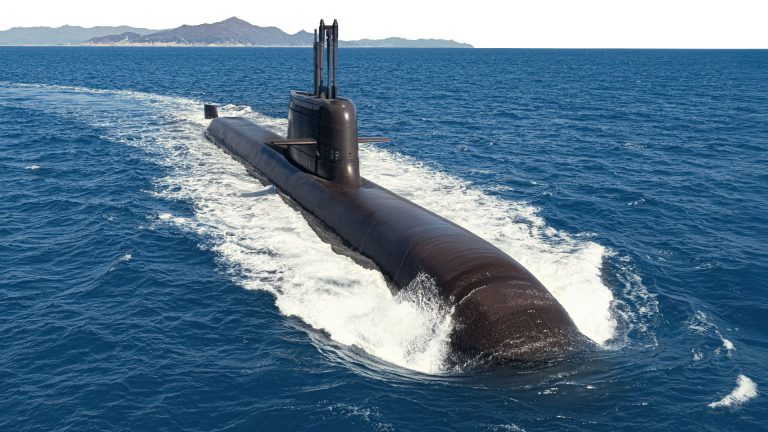
• Hanwha-led industrial cooperation related to Canada’s Patrol Submarine Project (CPSP) could support approximately 200,000 job-years over a 15-year period (2026–2040), equivalent to average annual employment of approximately 15,000 jobs, based on analysis by KPMG.
• Hanwha plans a large-scale, multi-decade trade and investment footprint across Canada, supporting sustained employment and localization across a broad range of sectors — from steel and materials to shipyard cooperation, submarine sustainment and MRO, infrastructure, advanced manufacturing, artificial intelligence, satellite communications, and digital technologies — anchored in major industrial provinces.
When Canada launched the Canadian Patrol Submarine Project (CPSP), the initial debate understandably focused on technical naval capabilities such as range, endurance, weapons and combat management systems, and performance in demanding operating environments. Increasingly, however, the program is being assessed through a broader lens: whether major defence procurement can deliver sovereign industrial capacity and contribute to Canada’s wider nation-building objectives.
Hanwha’s approach to CPSP reflects that shift more than others. Rather than treating the program as a transactional submarine acquisition, Hanwha has positioned CPSP as a strategic gateway for long-term industrial participation in Canada, linking defence sustainment with a broader portfolio of investment, trade, and industrial cooperation across multiple sectors.
The employment estimate reflects an interim assessment based on a defined portfolio of more than 20 Hanwha-linked industrial programs currently planned, or under development or consideration. These programs span a broad range of activities, including defence sustainment and maintenance, repair and overhaul activities, submarine-related logistics and infrastructure, shipyard co-operation, domestic steel and materials, equipment localization, advanced manufacturing, aerospace and aviation systems, digital and AI-enabled solutions, satellite communications, joint R&D initiatives, and venture and SME investment in Canadian companies. Together, they form the analytical basis for the job-years estimate at this stage, with further analysis expected as individual programs advance in scope and execution.
What the numbers show
According to KPMG analysis, Hanwha-linked industrial cooperation related to CPSP is forecast to support approximately 15,000 average annual jobs over the program period. Across a 15-year period from 2026 to 2040, this equates to approximately 200,000 job-years, encompassing direct, indirect, and induced employment.
The employment impact is driven by a broad, multi-sector industrial base spanning shipyard cooperation, domestic steel production, infrastructure, equipment localization, MRO, R&D, advanced manufacturing, and digital and satellite-enabled systems. This breadth of industrial activity is a key differentiator, enabling sustained employment beyond a single defence platform and anchoring CPSP within a long-term Canadian industrial ecosystem.
Stéphanie Tremblay, Senior Manager, Strategy and Economics at KPMG, said, “KPMG used Hanwha’s projected investments, related future sales and anticipated purchases (procurements) to estimate the direct, indirect, and induced employment impacts based on Statistics Canada’s input–output model. Employment results are expressed in person-years, representing the equivalent of one full-time worker performing a year’s worth of work over the 2026–2040 period.”
She explained that person-years reflect employment supported over time rather than headcount in any single year. For example, four person-years may represent one full-time equivalent (FTE) working for four years, or two FTEs working for two years each. She added that these figures represent high-level estimates based on preliminary information provided by Hanwha and are expected to evolve.
“In most cases, future sales arising from investment projects and anticipated purchases would sustain recurring annual activity in the Canadian economy over the 2026–2040 period, accounting for roughly two-thirds of the total job-years impact,” she added. “This dynamic is reflected in the annual employment trajectory, with employment ramping up in the initial years before stabilizing at sustained levels during long-term operations.”
Where the employment comes from
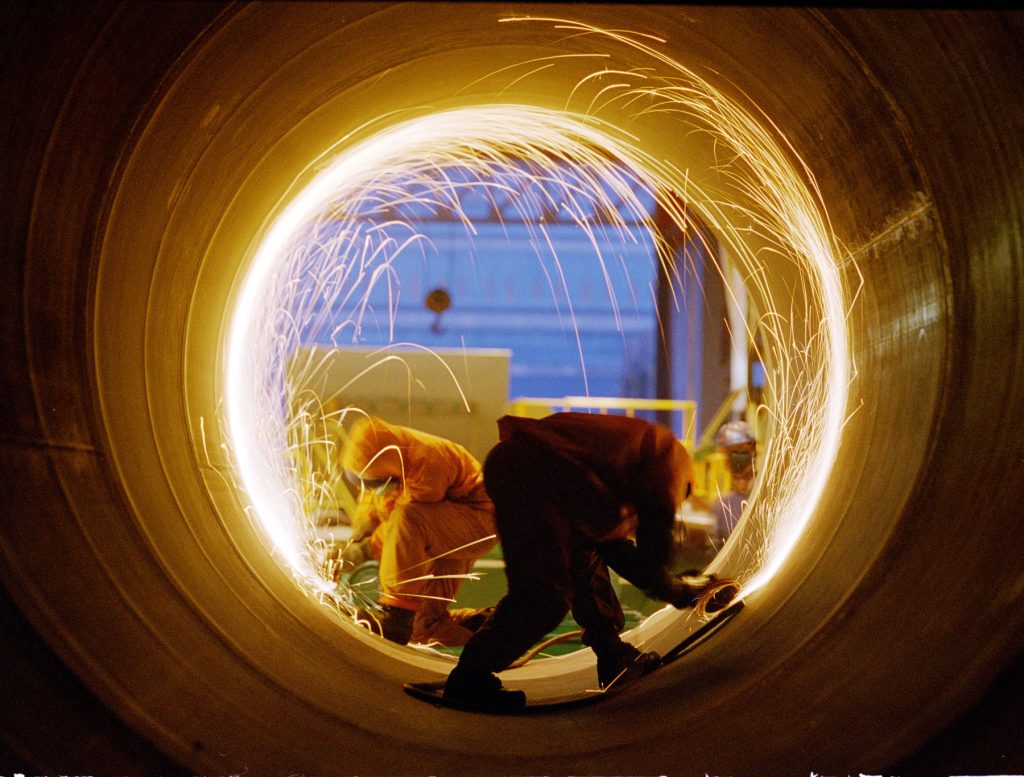
The analysis also highlights that employment effects are diversified across the Canadian economy. Large, long-running industrial and infrastructure projects support steady workforces over many years.
Alongside this sit manufacturing and industrial activities such as equipment assembly, facility upgrades, maintenance operations, and logistics services. These activities generate sustained demand for skilled technicians, engineers, and production workers and extend across the full value chain, from upstream suppliers and component manufacturers to downstream sustainment, services, and logistics providers.
There is also a growing share of employment tied to advanced technology and innovation. Demand for digital engineering, AI-enabled systems, satellite communications and related digital technologies, and applied research creates high-skill roles that complement traditional manufacturing and help keep Canada’s industrial base competitive and future-ready.
Why these jobs last
This employment profile is driven by long-term operational activity rather than short-term construction, underpinned by the development of a trusted, through-life submarine sustainment and support ecosystem anchored in Canada. A significant share of the jobs are tied to manufacturing, maintenance, systems integration, and lifecycle services — functions that support stable employment and supplier continuity over time, while strengthening Canada’s sovereign in-service support capability.
CPSP is structured as a multi-decade industrial program, spanning initial construction through decades of in-service support, maintenance, and upgrades. As a result, many of the jobs assessed in the KPMG analysis extend well into the 2030s and 2040s, aligning with Canada’s long-term plans for defence modernization, clean energy, and critical infrastructure investment.
For workers, this creates opportunities for long-term careers rather than project-based employment. For companies, predictable demand over extended horizons supports sustained investment in local facilities, skills, and supply chains.
“Our commitment in Canada is centred on long-term employment and industrial growth,” said Hee-Cheol Kim, President and CEO of Hanwha Ocean. “By investing across multiple sectors and working with Canadian partners nationwide, we are helping to build industrial capability that stays in Canada for decades — supporting both economic resilience and long-term security.”
Building a CPSP Industrial Alliance Across Canada
Hanwha Ocean has engaged with more than 100 Canadian companies over the past two years to form a broad, nationwide outreach effort aimed at building a long-term industrial ecosystem in Canada.
To date, from this wider engagement, Hanwha Ocean has established formal cooperation with more than a dozen Canadian partners, including Babcock Canada, BlackBerry, CAE, Curtiss-Wright Indal Technologies, Des Nedhe Group, Gastops, Hepburn Engineering, J Squared Technologies, L3Harris Canada, ModestTree, and PCL Construction. Looking ahead, Hanwha’s CPSP value chain is expected to further expand through cooperation with local shipyards, the domestic steel industry, satellite communications providers, and a wider range of Canadian industrial partners across multiple sectors.
Alongside CPSP-related industrial cooperation, Hanwha is also building a wider network of engagement across Canada through its group affiliates, reflecting the breadth of its industrial portfolio and regional presence. Most recently, Hanwha’s energy affiliate Q ENERGY France, in partnership with Hanwha Ocean, entered the pre-qualification process for an offshore wind project in Nova Scotia, while Hanwha Ocean also signed an MoU with Fermeuse Energy to explore cooperation related to the Newfoundland and Labrador LNG project.
Why Hanwha stands out as a partner for Canada
Hanwha stands out as a partner for Canada because of its ability to translate defence programs into long-term industrial participation. Rather than approaching CPSP as a standalone acquisition, Hanwha is building a sustained industrial presence in Canada that supports employment and capability over time.
This approach draws on the breadth of the Hanwha Group’s industrial and technology ecosystem, spanning more than 100 affiliates across core industrial and advanced technology sectors. It allows CPSP-related activity to be embedded within a broader investment footprint across areas such as steel, energy, space, advanced manufacturing, and digital technologies — supporting stable employment beyond defence alone.
Hanwha’s global experience reinforces this model. Across Asia, Europe, the Middle East, and North America, the company has delivered large-scale industrial and defence projects by combining capital investment, local workforce development, and long-term in-country operations.
Applied in Canada, this approach shows how defence-related cooperation can deliver more than platforms — supporting industrial resilience, long-term employment, and national capability over decades.